
2026 Bathroom Remodel Cost Guide

Click here to read the Chapter 2 Summary
To understand the true cost of a bathroom remodel in 2026, we must move past the concept of “flat rates” or “ballpark figures.” In the current economic climate, the National Kitchen & Bath Association (NKBA) and leading Midwest firms have seen a distinct bifurcation in how capital is deployed. Homeowners are no longer just “fixing” bathrooms; they are performing high-level capital improvements aimed at long-term equity and personal wellness.
As of 2026, the national average for a full-scale bathroom renovation has settled between $17,500 and $35,000, while luxury master suites in the Kansas City market frequently exceed $65,000. However, these numbers are deceptive without a technical breakdown of where the money is going and why costs have shifted so significantly in the last 24 months.
2.1 The Strategic Classification of 2026 Projects
In 2026, professional estimators categorize projects into three distinct financial tiers based on their scope and intended ROI.
Tier 1: The Cosmetic Refresh ($6,500 – $12,500)
Often referred to as a “Pull and Replace,” this tier is focused on high-visibility aesthetic upgrades without altering the room’s footprint.
- The Scope: This covers a new vanity, high-efficiency plumbing fixtures, updated lighting, and professional painting. It may also include a high-quality acrylic tub-liner or professional tile refinishing.
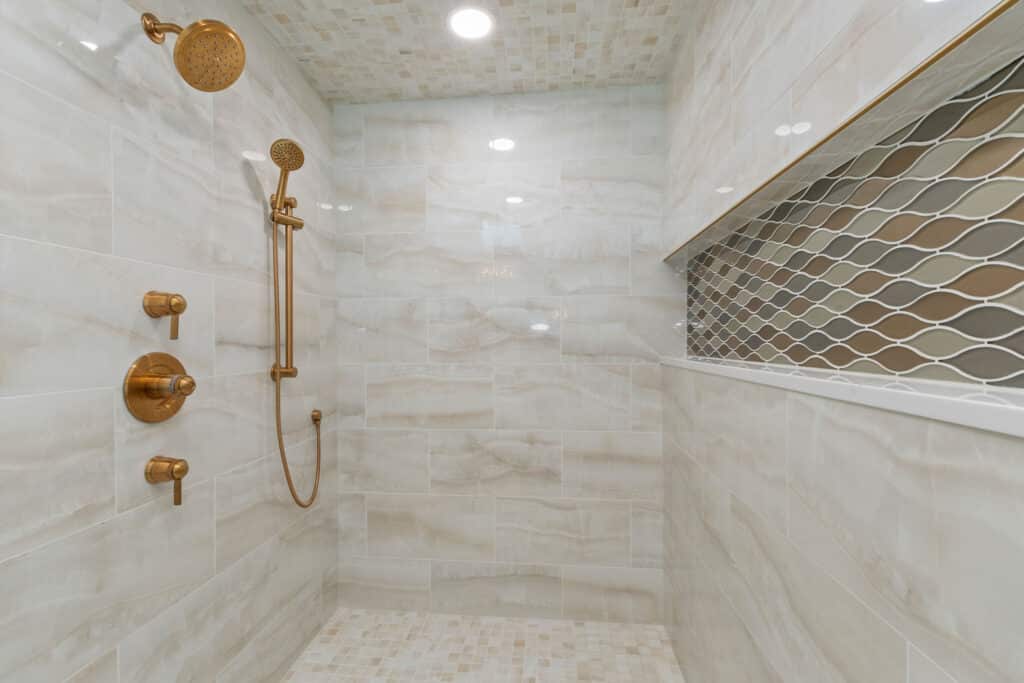
- Financial Driver: In 2026, the cost of high-end finishes (brushed gold, champagne bronze, and matte black) has stabilized, allowing homeowners to achieve a “luxury look” at this price point.
- CFO Insight: This tier offers the highest percentage of immediate ROI (often 80-90%). For a Kansas City home in the $300,000–$450,000 range, this is the most efficient use of capital to prepare for a quick sale.
Tier 2: The Mid-Range Transformation ($22,000 – $38,000)
This is the standard for 2026 suburban renovations. It involves a full demolition down to the structural studs and a total reconfiguration of the “wet area.”
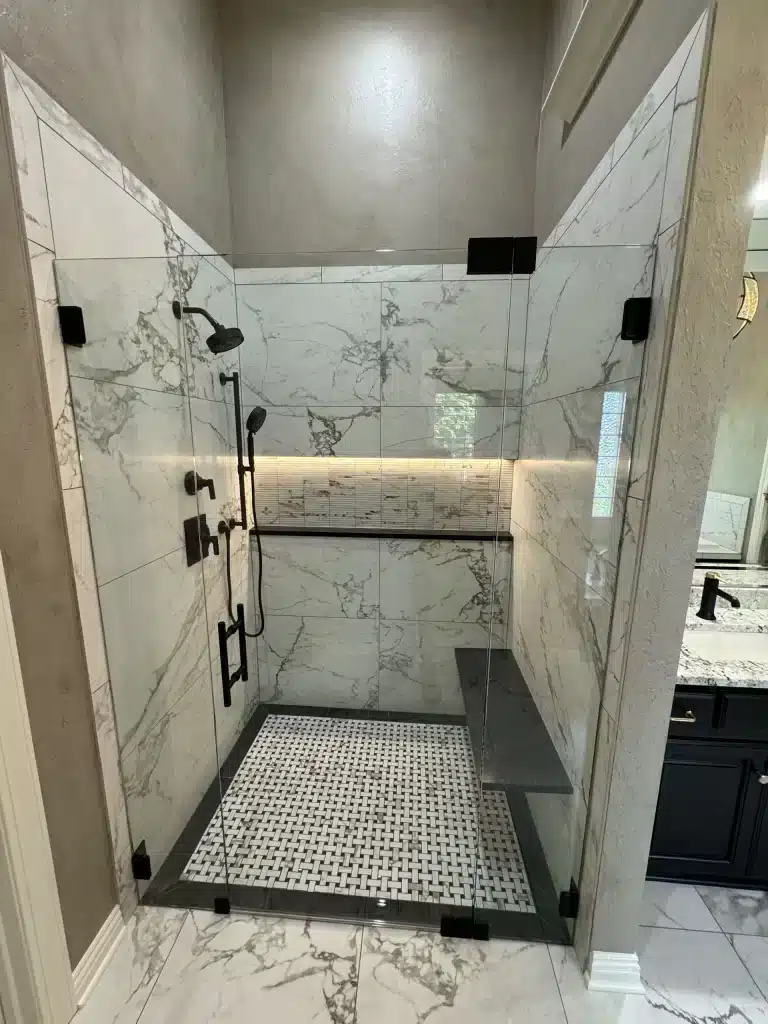
- The Scope: A complete gut-rehab. This includes new subflooring (now a standard requirement for 2026 warranties), a custom-tiled walk-in shower with a frameless glass enclosure, and premium quartz or sintered stone countertops.
- Financial Driver: The shift here is the “Labor-to-Material Ratio.” In 2026, labor accounts for roughly 55% of this budget due to the specialized skills required for modern waterproofing systems like Schluter-Kerdi or Laticrete.
- CFO Insight: This is the “sweet spot” for long-term equity. These materials are chosen for their 20-year durability, effectively lowering the “Total Cost of Ownership” (TCO) by reducing future maintenance.
Tier 3: The Luxury Wellness Suite ($50,000 – $100,000+)
The luxury market in 2026 has moved away from “showy” aesthetics and toward “integrated wellness technology.”
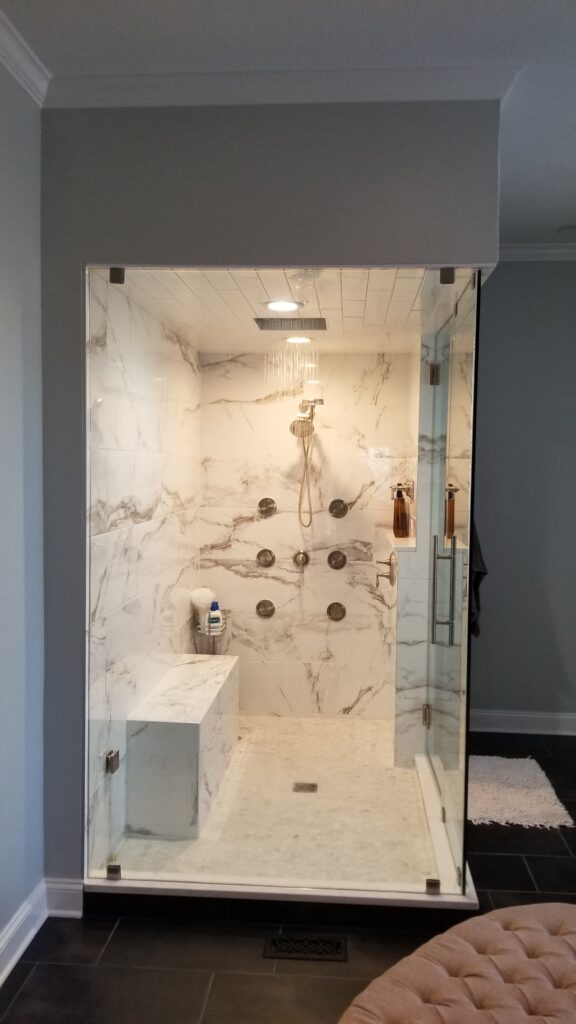
- The Scope: Often involves structural changes, such as moving the plumbing “stack” or expanding into an adjacent closet. Features include steam showers, infrared saunas, intelligent bidet toilets, and radiant floor heating integrated into the home’s smart system.
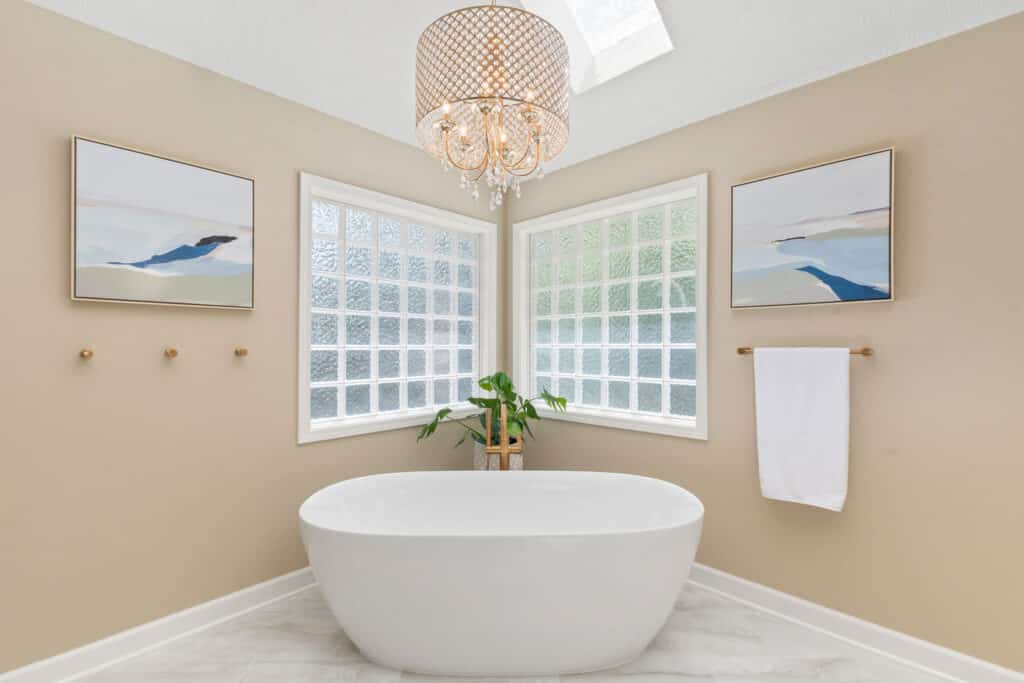
- Financial Driver: The primary cost driver here is Trade Sequencing. Coordinating the specialized electrical requirements of a steam generator alongside the structural needs of a freestanding resin tub requires a dedicated Project Manager.
- CFO Insight: While the pure cash ROI might sit at 60-65%, the “Alpha Property” status this gives a home in markets like Leawood or Liberty is a significant competitive advantage.
2.2 The 2026 Macro-Economic Shifts
To understand why these prices are higher than those in 2024 or 2025, we must examine the macro-economic forces currently at play in the Kansas City construction sector.
The Skilled Labor Premium
We have reached a critical point in 2026 where the supply of Master Plumbers and Electricians is 30% below the national demand. In the Kansas City metro, this has resulted in:
- Increased Hourly Rates: Lead plumbers are now billing between $145 and $210 per hour.
- Mobilization Fees: Contractors are now charging “site setup” fees to cover the rising cost of fuel and high-tech equipment transport.
- Apprenticeship Levies: Many top-tier firms are building training costs into their overhead to ensure the next generation of artisans, which is reflected in the final quote.
Material Science and Sustainability
In 2026, “cheap” is the most expensive thing you can buy. Materials that were standard in 2020 (like basic ceramic tile and MDF vanities) are being phased out by professionals in favor of Long-Lifecycle Materials.
- Sintered Stone: Becoming the standard for 2026 countertops, it is more heat and scratch-resistant than quartz but requires specialized diamond-blade cutting, which increases fabrication costs by 20%.
- High-Efficiency Infrastructure: 2026 building codes in Missouri and Kansas have pushed for higher R-value insulation and low-flow fixtures. While the initial “Buy-in” is 15% higher, the reduction in monthly utility costs provides a “soft ROI” over the lifespan of the bathroom.
2.3 Regional Cost Nuances: The Kansas City Advantage
While national guides provide a baseline, Kansas City is unique. As your CFO, I have adjusted our internal “Cost-to-Build” indices for 2026 to reflect our local realities.
- The Logistics Dividend: Because Kansas City is a central logistics hub, we often pay 5-8% less for heavy materials like natural stone and cast iron compared to coastal cities.
- The Climate Tax: Conversely, our extreme freeze-thaw cycles mean we must invest more in “Sub-Surface Integrity.” In 2026, we allocate an average of $1,400 more per project for anti-fracture membranes and high-grade thin-sets than contractors in more temperate climates. This prevents grout cracking during our 100°F summers and -10°F winters.
2.4 The CFO’s Contingency: Risk Mitigation in 2026
In 2026, a 10% contingency fund is the absolute minimum—I recommend 15%. The “Hidden Debt” of older Kansas City homes (built in the 1950s-1980s) often includes:
- Outdated Electrical: Many homes still have 100-amp panels that cannot handle a 2026 master bath’s load (steam, heated floors, smart mirrors). Upgrading a panel can add $3,500 – $5,000.
- Plumbing Corrosion: Finding galvanized pipes during a demo is a “Budget Emergency” that requires an immediate re-pipe of the entire bathroom.
2.5 Conclusion: Defining Your Investment Strategy
Before you sign a contract in 2026, you must align your budget with your home’s “Terminal Value.” If you live in a neighborhood where the median home value is $350,000, spending $80,000 on a bathroom is a “lifestyle choice,” not a “financial investment.”
At Trends Kitchen & Bathroom Specialists, we lead with transparency. We provide a Financial Performance Report for every project, detailing how your selections influence both the immediate cost and the long-term equity of your home. By understanding the average costs of 2026, you move from being a “consumer” to being a “capital manager” of your home’s most vital interior asset.