
2026 Bathroom Remodel Cost Guide

Click here to read Chapter 4 summary
When underwriting a bathroom renovation, the transition from structural engineering to finish selection is the exact point where a project’s return on investment is either locked in or permanently eroded. In the 2026 economic landscape, the National Kitchen & Bath Association (NKBA) has tracked a fundamental market shift: homeowners are completely moving away from sterile, high-maintenance cool grays and cheap, disposable materials in favor of natural warmth, tactile surfaces, and long-lifecycle performance assets.
As your CFO and Lead Estimator, I view finish materials through the lens of a Lifecycle Asset Matrix. A material’s true cost is never defined by its initial procurement price; it is defined by its durability, its maintenance overhead, and its direct impact on your home’s terminal value. This chapter performs a clinical financial evaluation of 2026 finish selections, distinguishing between sound capital investments and high-depreciation lifestyle surcharges.
4.1 Faucets and Fixtures: The Industrial Move Away From Polished Finishes
In 2026, polished chrome and basic polished finishes have steadily declined in luxury applications, representing a diminishing return on perceived luxury. Industry data confirms that matte (54%), brushed (51%), and satin (46%) finishes have thoroughly overtaken the market.
From a capital management perspective, the choice of finish dictates long-term maintenance costs and fixture lifecycle:
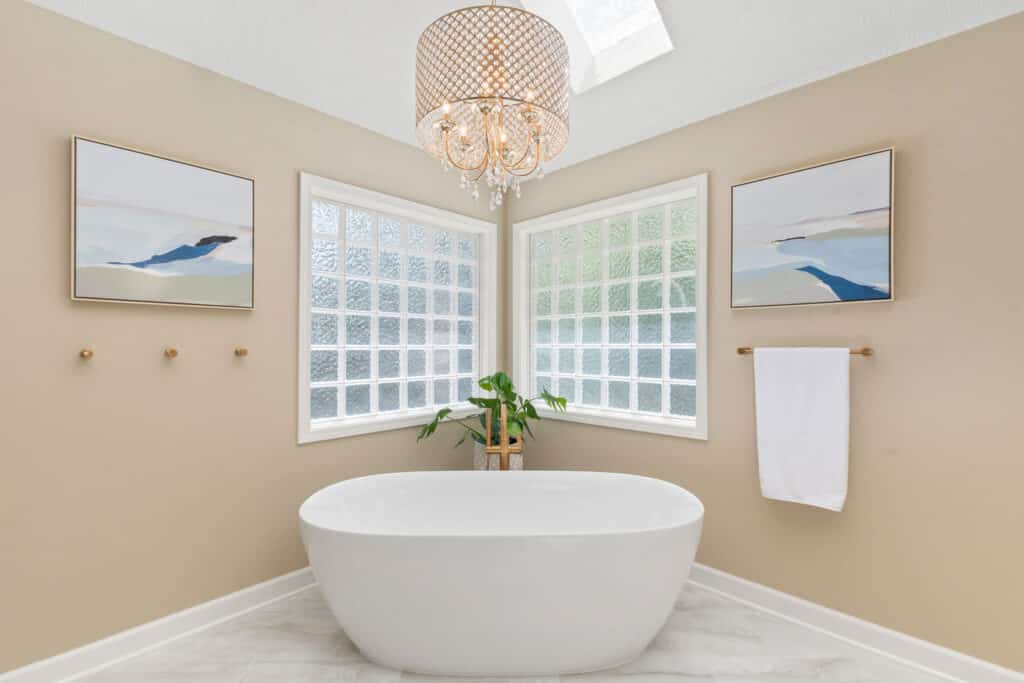
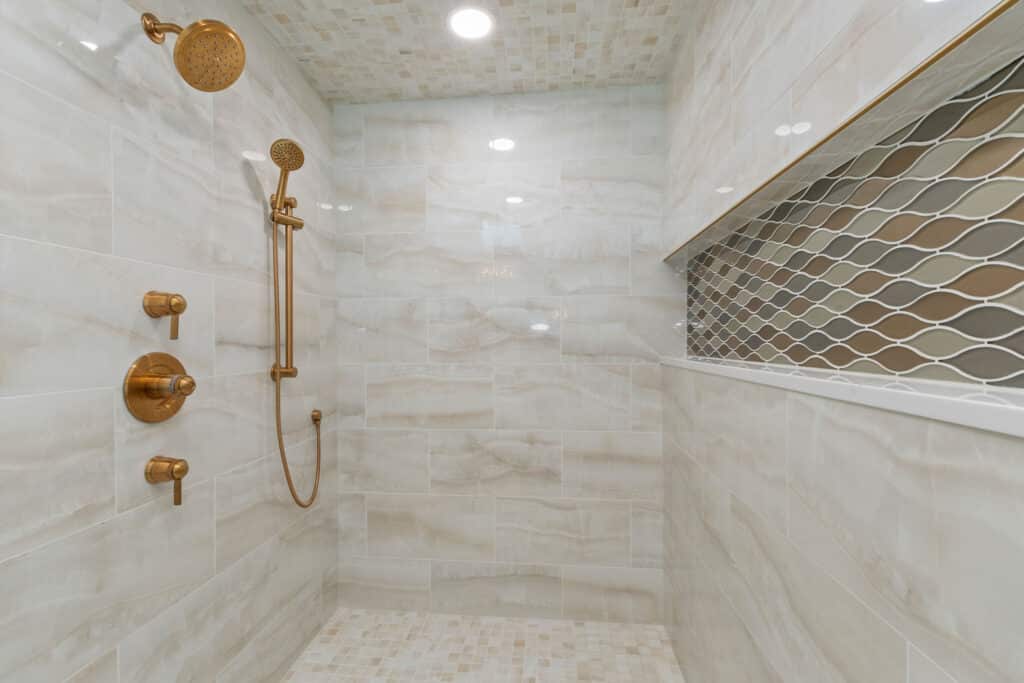
- The High-Performance Standard (Brushed Gold, Champagne Bronze, Gunmetal): Premium manufacturers like Moen and Brizo have optimized physical vapor deposition (PVD) coatings. This molecular-level engineering bonding ensures that warm metallics resist hard water spots, regional lime scaling, and corrosion. While the initial procurement cost sits at a 15% to 20% premium over polished chrome, the extended lifecycle and massive “perceived luxury” multiplier at resale yield a superior long-term ROI.
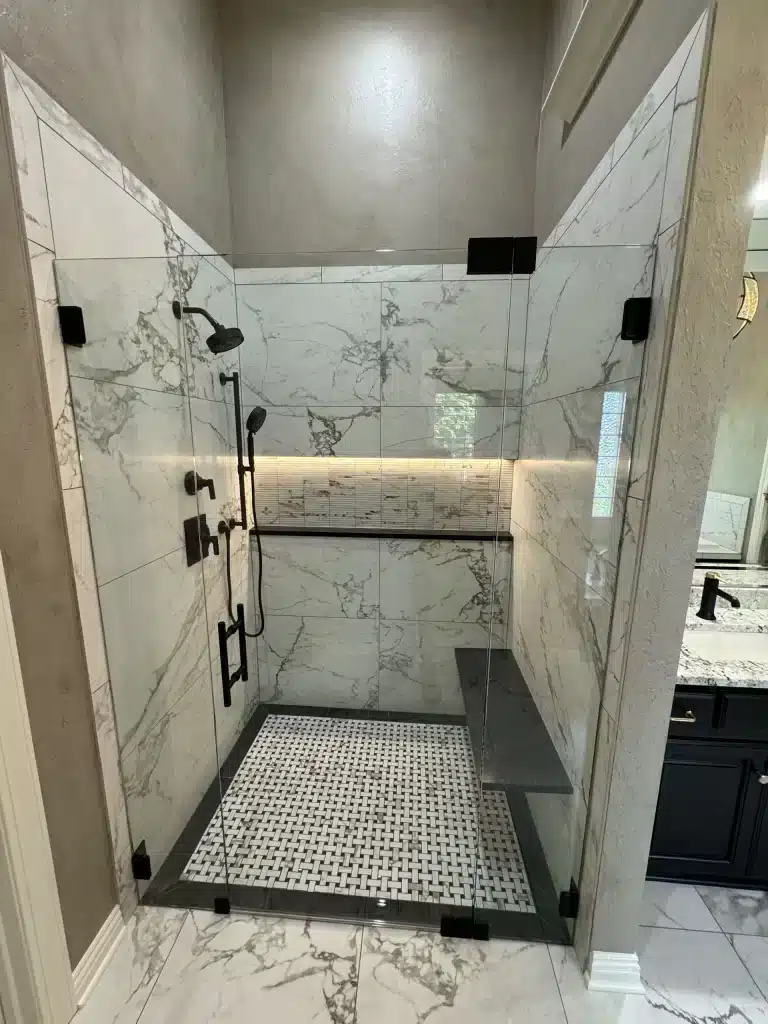
- The Matte Black Caution: While matte black remains a highly utilized asset for creating sharp structural contrast, it carries an inherent operational liability in specific geographic zones. In Kansas City municipalities with high municipal water hardness, matte black fixtures act as a magnet for white calcium and magnesium deposits, significantly shortening their aesthetic lifespan unless paired with a whole-home water conditioning system.
4.2 Countertops and Slabs: Sintered Stone vs. Quartz
The material science of 2026 surfaces has changed the traditional cost-to-build calculations. While quartz vanities remain a highly stable, durable choice for standard guest bathrooms, the premium luxury tier has pivoted sharply toward Sintered Stone and ultra-compact surfaces.
[Procurement Matrix: Material Science vs. Fabrication Overhead]
Quartz: --------- Lower Initial Cost | Standard Diamond Tools
Sintered Stone: - High Initial Cost  | Requires Specialized Fabrication (+20% Labor)
- The Material Reality: Sintered stone is manufactured using extreme heat and pressure to mimic natural stone, resulting in a surface that is fundamentally non-porous, completely scratch-resistant, and entirely immune to burn marks from styling tools.
- The Fabrication Surcharge: Homeowners must understand that sintered stone introduces a 20% fabrication labor premium. The material is so dense that it requires specialized diamond-blade cutting equipment and slow-speed CNC routing. If an amateur estimator quotes sintered stone at standard quartz fabrication rates, a major budget contingency event is guaranteed during the installation phase.
4.3 Vanities and Cabinetry: The Dominance of Wood-Faced Biophilic Assets
In 2026 cabinetry design, wood-faced vanities (62%) have officially eclipsed painted vanities (53%) as biophilic, organic-minimalist design principles dominate the luxury residential sector.
- The Total Cost of Ownership (TCO) Variance: Painted cabinetry faces—particularly low-grade Medium-Density Fiberboard (MDF) variants—represent a highly volatile risk in a bathroom environment. In the high-humidity, shifting climate of the Midwest, moisture infiltration quickly compromises painted joints, causing swelling and finish cracking.
- The Furniture-Grade Asset: Reputable regional firms are leading with furniture-grade, solid-core vanities utilizing fluted or ribbed white oak, walnut, or rift-sawn oak faces protected by high-durability marine-grade sealants. Investing a 25% premium upfront in furniture-grade structural cabinetry completely mitigates the risk of structural rot, ensuring the vanity maintains its aesthetic integrity across a 20-year asset lifecycle.
4.4 Tile Drenching and the “Zellige” Labor Premium
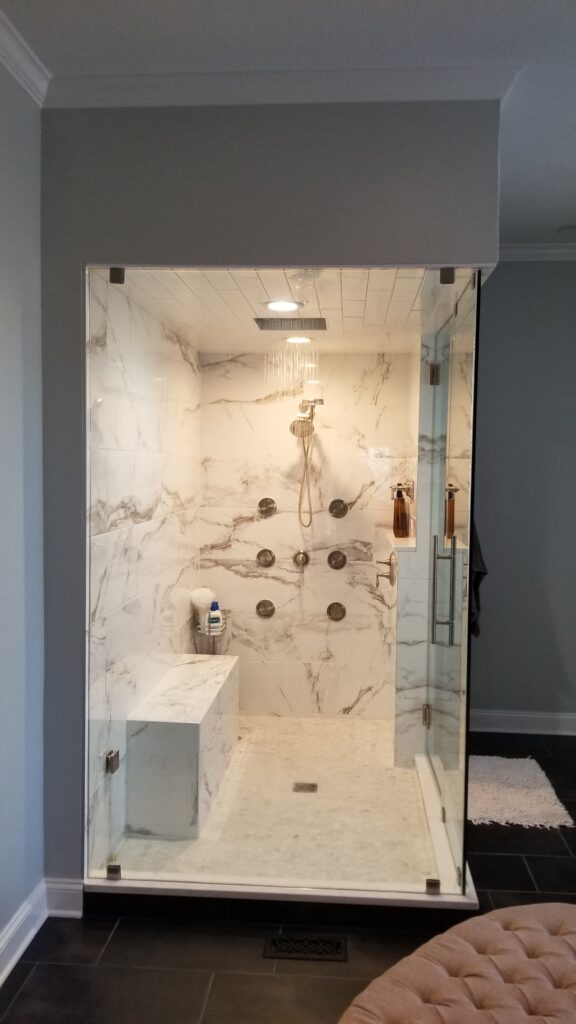
A major macroeconomic design shift in 2026 is “Tile Drenching”—the practice of running tile floor-to-ceiling across multiple walls, or enveloping the entire wet area to eliminate grout lines and minimize long-term drywall maintenance. However, the financial driver here is dictated entirely by tile geometry and material origin.
- Large-Format Porcelain Slabs (89% Preference): Homeowners are demanding smaller or completely non-existent grout lines. Utilizing massive, large-format porcelain tile sheets (such as 48″x96″ or 60″x120″ panels) reduces grout joints by up to 90%. This minimizes tile upkeep and maximizes water-shedding efficiency, providing an exceptional “soft ROI” in long-term maintenance savings.
- The Artisanal Surcharge (Zellige and Hand-Pressed Tiles): Conversely, if you select highly trending Moroccan Zellige or hand-pressed tiles for your vertical accent walls, you are triggering an aggressive labor multiplier. Because these tiles are structurally irregular, variable in thickness, and have chipped or uneven edges, they cannot be spaced with traditional plastic wedges. They must be installed using a meticulously slow, hand-set “butt-joint” method. Expect specialized tile artisans to bill $35 to $45 per square foot for labor alone on these materials, compared to the standard $18 per square foot baseline for uniform porcelain.
4.5 Regional Material Nuances in the Kansas City Core
As an established asset manager in the Kansas City construction space, your material selections must directly respect our physical location:
- The Logistics Dividend: Because Kansas City serves as an active, central geographic logistics hub, local material supply chains experience a 5% to 8% cost reduction on the shipping and transport of heavy, dense commodities—such as natural stone slabs and cast-iron fixtures—compared to hyper-congested coastal metropolitan markets.
- The Neighborhood Integration Rule: If you are executing a finish strategy in a high-end Northland enclave like Briarcliff, Weatherby Lake, or Tremont, your selections must match the property’s micro-market positioning. Installing low-grade, builder-spec porcelain or off-the-shelf vanities in an estate home located in these premium sectors actively damages the asset’s terminal value. In these high-value zip codes, luxury materials like sintered stone counters, custom rift-sawn oak vanities, and warm PVD-brushed metallic fixtures are mandatory structural benchmarks to secure top-tier resale velocity.