
TRENDS HOUSE & HOME · FOOD, FAMILY & TRADITION
Dinner is finished, but the kitchen is not. Plates are coming back, somebody is packing leftovers, and the pie has landed on the only counter that was still clear. Then the first person asks about coffee.
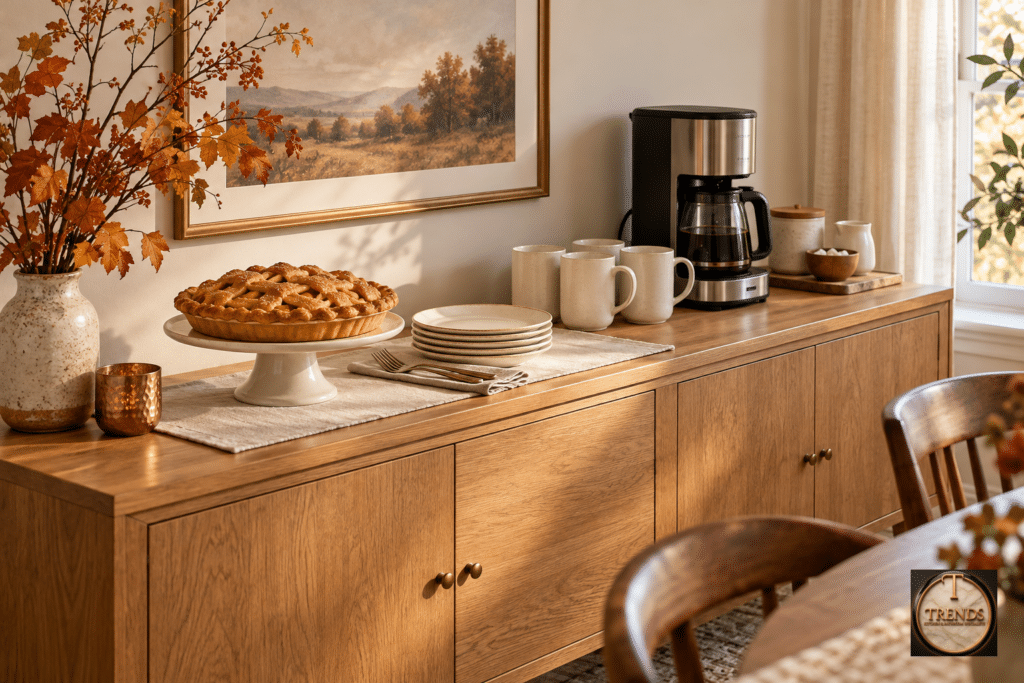
Dessert deserves a little planning of its own. It does not require a built-in bar or a whole extra room. It needs a place where people can help themselves without standing in the cleanup line, and where the person pouring something hot has room to work.
The Crown Center Ice Terrace opens November 6, with its opening-day free skate listed from 6 to 9 a.m. Whether your gathering starts with an outing or stays around the table, a warm drink and a place to sit can give the afternoon an easy finish.
For more of what's happening around Kansas City, see our live events calendar.
Quick read: Put dessert outside the dirty-dish route. Stage plates, forks and serving tools before dinner. Give coffee a stable, suitable surface with safe power and room to pour. Plan the return trip for mugs and leftovers. Try a temporary setup before deciding the house needs a permanent beverage area.
Choose the place by watching the traffic
Start where dinner ends. Which route do people use to carry dishes back to the kitchen? Where does the dishwasher door open? Where will someone stand to scrape plates or put leftovers away? The dessert spot should not make everybody stop in the middle of those jobs.
A dining-room sideboard may be useful because it is close to the table without being part of the sink area. A separate stretch of kitchen counter can also work if it stays out of the cleanup path. The name of the piece of furniture matters less than its stability, surface, access and actual role during the meal.
Walk the route carrying an empty plate and mug. Can you set one down while using the other? Is there room to turn without bumping a chair? Does the place only work while all the dining chairs are pushed in? Test the arrangement with people seated, because that is when dessert service usually happens.
Put the everyday pieces out first
Before arranging the pie stand, place the plates, forks, napkins and mugs. Those are the items people reach for first. Keep them visible and easy to pick up without reaching over food. A pretty display becomes frustrating when every guest has to ask where the forks are.
Put the serving tools with the desserts they serve. A pie needs a suitable server; a cake may need a knife and a place to put it between uses. Consider who should handle cutting. If a dessert is awkward or the knife would sit within a child's reach, serve portions yourself instead of treating every item as self-service.
Keep a small reserve nearby rather than stacking every plate you own on the display. Refill as needed. A crowded arrangement often starts with useful intentions, but it leaves no open surface for someone to steady a plate. That empty patch of counter is part of the setup, not space waiting for another decoration.
Match the serving height to the people coming
A high counter can be comfortable for one person and difficult for another. Think about children, shorter adults and guests who need to remain seated. You do not need to make assumptions about anyone's abilities; simply offer help and arrange the essentials where they can be reached without stretching over hot equipment.
Try the reach yourself with an empty mug. If you have to lean across a stand of cupcakes to reach the sugar, move it. Keep heavier items close to the front of their usable area without putting them on the edge. Avoid tall, unstable stacks that look organized until somebody takes the top piece.
The coffee station may need a different arrangement from the dessert plates. An adult can pour hot drinks while guests choose dessert. That can be easier than expecting everyone, including children, to manage a full carafe in a tight space. Self-service is convenient only when the people using it can do so comfortably.
Give hot coffee a stable home
Choose a level, stable surface suitable for the appliance and any heat or moisture it produces. Follow the coffee maker's instructions for placement, clearances and electrical connection. A decorative console is not automatically a suitable appliance station simply because there is room for the machine on top.
Keep cords away from edges and walking paths, and keep hot containers where they cannot easily be pulled or knocked over. The American Academy of Pediatrics advises keeping appliance cords out of children’s reach and taking care when carrying hot liquids. A gathering brings more movement, more distraction and more reaching hands than an ordinary morning.
Set up the pouring area before switching the appliance on. Leave a place for a mug, check that the carafe can be removed without hitting a shelf, and keep the path clear. If an outlet is not conveniently placed, choose another location or have a licensed electrician assess a permanent solution. An improvised cable running across the room is not a reason to keep the coffee there.
Keep the extras from taking over
Coffee can arrive with a small collection of things: spoons, sweetener, milk, cream, tea, hot water and a place for used tea bags. Decide which choices you actually want to offer. A simple, well-arranged station usually works better than every possible option crowded around one machine.
Use a small tray to group the items that belong together, but leave the pouring surface open. Keep anything needing refrigeration under appropriate food-safe handling rather than leaving it out indefinitely for the sake of the display. Follow the product label and USDA guidance for perishable foods.
Put a small, clearly chosen place nearby for used spoons or wrappers. It should not be the same spot where clean forks are waiting. Think about the person who takes tea while someone else pours coffee: can both finish without crossing hands over the hot equipment? Move the supplies until the answer is yes.
Dessert does not have to mean a huge display
One pie on a useful surface is enough to start. A stand can make a dessert easier to see, but it should be stable and allow safe serving. If cutting on the stand feels awkward, bring the dessert down to a suitable work surface, portion it and return the serving pieces to the display.
Leave the tall seasonal arrangement at the far end or on another surface. It should not hide the food or force someone to reach around it. A low bowl, a few autumn colors or the texture of the furniture can carry the seasonal look without taking up the whole area.
Consider bringing out some desserts when people are ready for them instead of leaving everything in place throughout dinner. Follow the storage requirements for each food. A chilled dessert needs a different plan from a packaged item that can safely stay at room temperature. The display should follow the food's needs, not determine them.
Plan where the used things go
The coffee bar is only half a system if mugs have nowhere to return. Choose a nearby landing place for used dishes that does not block clean service. It might be a cleared tray carried back in batches or a separate counter area away from the appliance.
Keep that return trip manageable. A tray filled beyond what someone can safely carry is not an improvement over two trips. If children are helping, give them a job suited to them, such as collecting napkins, while an adult handles hot drinks and heavy stacks.
After the gathering, look at where dishes actually accumulated. Did everyone leave cups on the table because the return area was hidden? Did the coffee station block the drawer holding the leftover containers? Those observations tell you what to move next time. A temporary setup is useful partly because it lets the household learn without committing to construction.
When a built-in area is worth considering
A dedicated beverage area can make sense when this is an everyday activity that repeatedly interferes with the kitchen. Maybe several people make coffee at the same time, or guests gathering around the main counter prevent cooking. Define that recurring problem before choosing cabinet doors or appliances.
A butler's pantry or built-in station involves more than attractive storage. Think about the work surface, appliance instructions, electrical planning, lighting, cabinet access and cleanup. If plumbing is proposed, have a licensed plumber and the rest of the project team evaluate it. Adding a sink simply because it looks useful can change the scope considerably.
Also be honest about what the temporary sideboard already does well. If it handles holidays comfortably and the kitchen works the rest of the year, you may have solved the problem. If it never has enough room, or the same awkward movement happens every morning, record the details for a permanent plan. Design should start with that evidence.
Our drink-station article covers refills and serving traffic, while Lighting the Holiday Table looks at the evening atmosphere. For permanent cabinet, appliance and layout decisions, use the complete kitchen remodeling guide.
Set out the mugs, plates and serving tools before dinner, then give dessert a place of its own.
Trends Kitchen & Bathroom Specialists
Sources: Crown Center events; American Academy of Pediatrics kitchen safety; USDA food safety basics.