
TRENDS HOUSE & HOME · FOOD, FAMILY & TRADITION
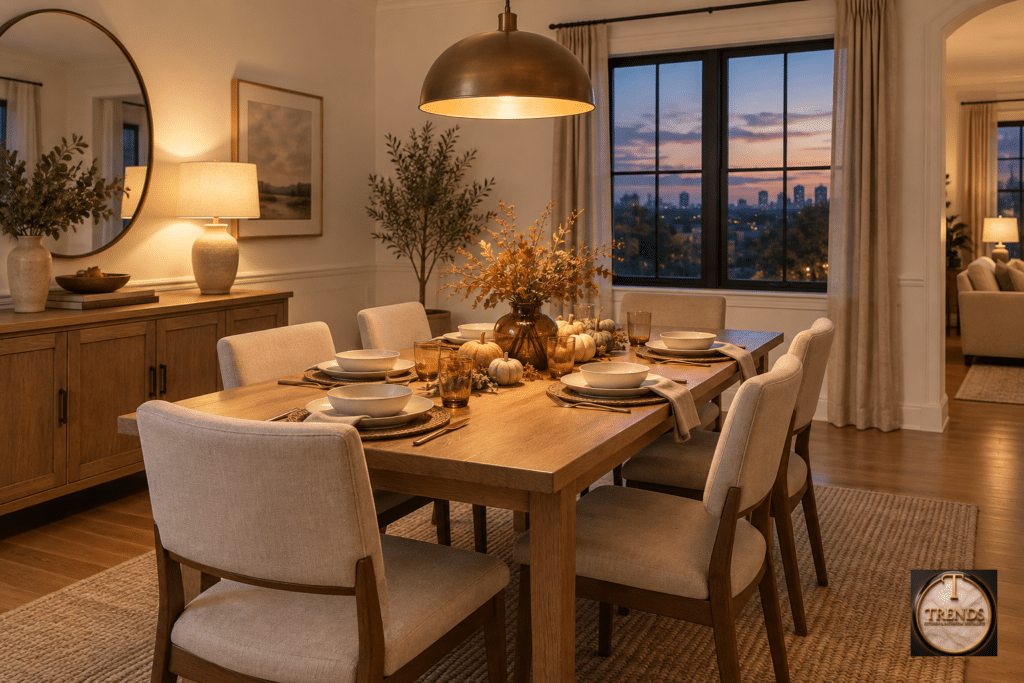
The runner is on the table. The little pumpkins look right. The plates match, the chairs are pulled up, and somebody has remembered the good napkins. Then you turn on the dining light and the whole setup feels different. One end is bright, the other is dim, and the person across from you disappears behind a centerpiece.
A table can be beautifully set and still be uncomfortable to sit at. Before adding another decoration, spend an evening looking at the light you already have. The goal is a meal where people can see their food, recognize faces and move around without the room feeling harsh.
It's Final Friday in downtown Parkville on October 30. If an evening out puts you in the mood to bring a little more warmth home, start with the place everyone gathers.
For more of what's happening around Kansas City, see our live events calendar.
Quick read: Try the room after dark with the actual table setup. Balance light over the table with light around the room. Check bulb and dimmer compatibility, keep decorations out of the serving space, and choose flameless candles when an open flame would be hard to supervise. Make permanent changes only after you know what the existing setup cannot do.
Sit down before deciding what needs to change
Most of us judge a light while standing in the doorway. Dinner happens from a different height. Put a plate and glass at each place, then sit in every chair. Can you see comfortably? Is a bare bulb shining into your eyes? Does the person at the end sit in a shadow? Does the centerpiece block your view of the person opposite?
Do the same test with the table extended if that is how you host. A fixture that works over a small everyday table may leave the added places noticeably darker. That does not automatically call for a new chandelier. A nearby lamp or a different arrangement may help. First identify which seat or activity needs attention.
Check the route from the kitchen as well. The person carrying a serving dish needs to see the floor and the edge of the table. A dramatic pool of light in the middle of an otherwise dark room may look good in a picture, but the room has to work when everyone stands up.
Give the room more than one source of light
The overhead fixture does not have to carry the whole evening. Think about three jobs: showing the food on the table, helping people see each other, and making the rest of the room comfortable to move through. One bright fixture may do one of those jobs well while falling short on the others.
A lamp on a sideboard can bring some light to the walls. Existing wall lighting or nearby living-room lamps may help the dining area feel connected to the house. Try the lights individually and then together. You may find that a modest overhead setting plus one lamp feels better than the ceiling light at full brightness.
Keep the sideboard useful. If it is also your serving station, a lamp cannot take the space needed for hot dishes or put its cord across the route people use. Start with what you own, but move it only where the surface is stable and the cord can stay clear of traffic.
Choose the light color on purpose
Bulb packaging can be confusing. Color temperature, measured in kelvins, describes the appearance of the light. Brightness is a different choice. A warmer-looking bulb does not necessarily mean a dimmer room, and a brighter bulb does not have to make the room look blue.
For a warm dining-room look, 2700K to 3000K is a useful range to try. That is a starting preference, not a rule for every home. Your wall color, wood, lampshades and daylight all affect what you see. Test the bulb in the actual fixture before buying replacements for the entire house.
Look across the room for mismatched light. A warm pendant, a cool white lamp and a strongly colored decorative bulb can make different parts of the table feel disconnected. Consistency often helps more than turning everything up. Stay within the fixture's permitted lamp type and rating, and follow its instructions rather than choosing a bulb solely because it fits the socket.
A dimmer is useful only when the parts work together
Being able to turn the light down for dinner and up for cleanup is practical. But an LED bulb labeled dimmable is only part of the arrangement. The dimmer and the lamp or fixture need to work together. Check the manufacturer's compatibility information before buying either one.
If an existing setup flickers, buzzes or behaves strangely at low settings, note when it happens and which lamps are installed. That gives an electrician something concrete to investigate. Do not assume the answer is to keep replacing bulbs at random or live with a control that is not working properly.
A new wall dimmer, a relocated box or a replacement hardwired fixture belongs with a qualified licensed electrician. Tell them how the room is used: a bright table for homework, comfortable light for dinner and enough light for cleanup. Those everyday uses matter more than choosing a control because its faceplate looks good.
Keep candlelight separate from the decorating pile
Candles can be attractive, but the runner, dried leaves, paper place cards and napkins are not a safe place to tuck a flame. The U.S. Fire Administration recommends keeping candles at least 12 inches from anything that can burn. Use sturdy holders on stable surfaces, keep children and pets away, and put flames out when you leave the room.
A dining table changes during a meal. A sleeve reaches across it. A napkin gets pushed aside. A serving platter takes the space that looked empty when you decorated. Evaluate candle placement for that moving, crowded version of dinner, not just the table before anyone sits down.
Flameless candles are a useful option when the look matters more than an actual flame. Follow the product's instructions and secure any small batteries away from children. You can still use height, repeated shapes and warm light without making someone responsible for watching open flames throughout the meal.
String lights need a place to belong
A strand of lights can look inviting around a seasonal display. It is less useful when the cable winds between dinner plates or the plug needs a cord across the doorway. Keep the working part of the table clear. Decorations should not compete with food, elbows and serving utensils.
Use lights intended for the location, inspect them for damage, and follow the manufacturer's instructions for mounting, power and connections. Avoid improvising a route that pinches a cord in a door or leaves it where a chair leg will roll across it. If the only available outlet creates an awkward path, choose another decoration.
A sideboard display may be a better home for decorative light than the center of dinner. Even there, leave room for the job that surface will do. If coffee, dessert or drinks will use it later, plan the whole evening before fastening anything in place.
Make a small dining room feel comfortable
A room does not become bigger because you put in a mirror, but the right reflection and a lighter wall can change how enclosed it feels. Before hanging a mirror, check what it reflects from a seated position. Reflecting a lamp may help; reflecting a glaring bulb directly at somebody may make the problem worse.
Keep the sightline across the table open. A low arrangement often works better for conversation than something tall and wide. Remove an extra chair or decorative stand if it narrows the path. The most helpful change may be taking one thing out rather than buying another item.
Fixture size deserves the same practical test. Hold up a paper outline or review dimensions against your real table and ceiling before choosing a large shade. Consider the table extended and closed, the view through the room and the fixture manufacturer's guidance. A photograph of somebody else's dining room cannot settle those details for yours.
Know when the problem is a project
Sometimes the fixture is centered on where the table used to be. Sometimes one switch controls too much, or the only useful lamp location has no convenient outlet. Those are worth recording after you have tried reasonable furniture and bulb changes. Describe the actual problem: glare in two seats, a dark serving counter, or a path that disappears when dinner light is lowered.
That description gives a designer or electrician a better starting point than “we need more lights.” A permanent plan might involve moving the fixture, adding another source of light or separating controls. It should also work for the ordinary nights when the table is smaller and nobody has set out a centerpiece.
For the rest of the gathering, our guides to seasonal decorating, getting ready for holiday guests and giving drinks their own station help connect the dining table to the spaces around it.
Set the table one evening this week, sit in every seat, and decide what the light needs to do before buying anything new.
Trends Kitchen & Bathroom Specialists
Sources: U.S. Fire Administration candle safety; Department of Energy: color and spectrum; ENERGY STAR lighting criteria and dimmer compatibility; Historic Downtown Parkville events.