
TRENDS HOUSE & HOME · FOOD, FAMILY & TRADITION
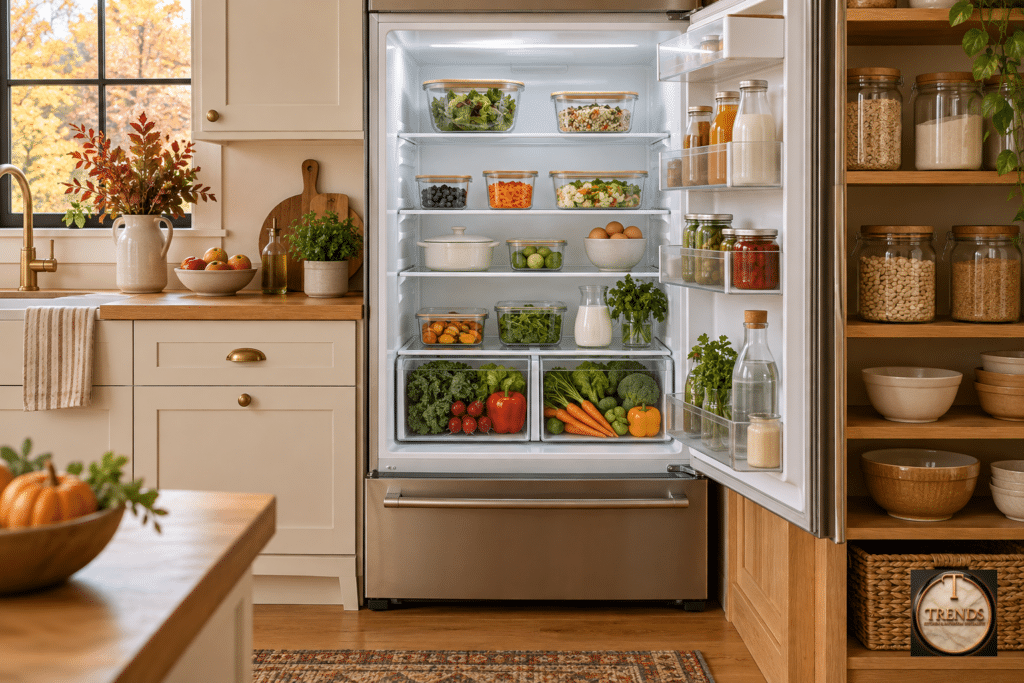
The make-ahead dish is finished. The lid is on. You open the refrigerator and discover that the only space left is the shape of a mustard bottle.
Holiday planning often starts with recipes and ends with a storage problem. A casserole needs more than ingredients. It needs a container, a shelf and a way to stay safely cold until the next step. The same is true of the vegetables, the guest's dessert and the leftovers you have not made yet.
Brookside's Holiday Season Opener runs November 12 through 14. If seasonal shopping is on the weekend list, give the refrigerator and pantry a look before bringing another round of groceries home.
For more of what's happening around Kansas City, see our live events calendar.
Quick read: Inventory before shopping, measure the containers you will actually use and reserve space for the finished dishes. Keep the refrigerator at 40°F or below under USDA guidance. Separate raw ingredients from ready-to-eat food, keep air circulation in mind and verify that any second refrigerator is suitable for its location.
Start by seeing what is already there
Take an inventory before emptying the refrigerator onto the counter. Identify what can be used in ordinary meals this week and what needs to be discarded under appropriate food-safety guidance. Do not taste an uncertain food to decide whether it is safe. Check labels, storage history and USDA guidance when there is a question.
Clean the appliance using its manufacturer's instructions, working in a way that keeps perishable food appropriately cold. The point is not to leave everything out for a long organizing project. Plan the work, have suitable storage available and return items promptly.
Do the same with the pantry. Half-used packages and duplicate purchases occupy space that could hold the ingredients for an actual planned dish. Make the shopping list from what is missing, not from what you think might be behind the cereal. A little inventory can prevent the holiday shelf from becoming a collection of three versions of the same item.
Measure the finished container, including its lid
A recipe may say it fits a certain pan, but your refrigerator has to fit that pan's handles, lid and height. Set out the empty containers before preparing the food. Measure or test the space they need without disrupting safe storage of the food already in the appliance.
A tall covered bowl can use the same shelf height as several shorter containers. A wide casserole may only fit when the door is fully open. Check those practical details before deciding that the appliance is simply too small. The choice of storage container can make a meaningful difference.
Avoid stacking in ways that make lids unstable or require moving a heavy dish to reach something frequently used. Follow the shelf load and storage instructions for the appliance. The best arrangement is one you can use without balancing a full casserole against your body while someone searches for the milk.
Assign space by the next job
Think about the meal in stages. Some ingredients are waiting to be prepared. Some dishes are finished and need refrigeration. Others will arrive with guests. After dinner, leftovers will need appropriate containers and cold space. Those stages overlap, so a plan that fills every shelf before guests arrive leaves no room for the next one.
Use a simple list to assign a shelf or section to each finished dish. You do not need a complicated labeling system. A piece of tape on a suitable container and a note on the menu can be enough to stop someone from putting a tall drink bottle in the only place the casserole will fit.
Keep frequently used items easy to find. If every coffee refill requires taking out a large tray, the arrangement will not survive the day. Place items according to the appliance instructions and food-safety requirements first, then consider access. Convenience should not put raw ingredients above uncovered ready-to-eat food.
Keep cold storage a food-safety decision
USDA recommends keeping the refrigerator at 40°F or below. Use an appliance thermometer to check the temperature rather than assuming that a dial setting describes the actual conditions. Follow the refrigerator's instructions for controls, loading and air circulation.
Keep raw meat, poultry and seafood securely contained so juices cannot contaminate other food. Ready-to-eat dishes should be protected from those raw ingredients. Use appropriate covered containers, and clean spills promptly under the appliance and food-handling guidance. A shelf plan is useful only if it respects what each food needs.
Do not pack the refrigerator so tightly that cold air cannot circulate. Reserve space for leftovers and follow USDA instructions for prompt refrigeration in shallow containers. A cold porch, a trunk or a garage shelf is not a temperature-controlled replacement for a refrigerator, even when the weather feels chilly. Plan storage around measured conditions, not the day's forecast.
Solve the tall-bottle problem before it takes a shelf
Drinks can occupy a surprising amount of usable refrigerator space. A collection of tall bottles may force a shelf arrangement that leaves little room for prepared food. Decide what truly needs refrigeration, follow the product labels and use the appliance's appropriate storage locations.
Keep the holiday drink plan connected to the food plan. If every guest brings a beverage, tell them where it will go. Do not assume that the main refrigerator can accept unlimited bottles while also holding the meal. A separate suitable cooler with proper cold management may serve some drinks, but perishable items still need safe temperatures.
Adjustable shelves can help, but change them according to the manual and make sure they are correctly seated. Do not remove supports or invent a shelf arrangement to gain a little more height. Take a photo of a successful layout so next year's preparation starts with something that already worked.
A garage refrigerator needs to suit the garage
An extra refrigerator can be useful, but the location matters. Garage temperatures may vary well outside the conditions an ordinary indoor appliance was designed to handle. Check the exact model's installation instructions and permitted ambient temperature range before relying on it for holiday food.
“Garage ready” is not a substitute for reading those limits. Different products have different operating ranges. Consider ventilation clearances, a suitable electrical supply and access as well. Have a licensed electrician address electrical questions, and follow the manufacturer's installation instructions.
Then check the actual temperature with an appliance thermometer. A second unit should not become a place where food disappears because nobody remembers what is inside. Keep a simple inventory and make the route practical. Carrying a heavy dish down stairs in a crowded house may be harder than the extra shelf space first suggests.
Organize the pantry around the work
Group the ingredients for a task where they are easy to see: baking supplies together, serving pieces in a useful spot and frequently used items within comfortable reach. Keep products in suitable containers, retain needed label information and follow storage instructions. A matching jar collection is optional; knowing what you have is the purpose.
Before buying organizers, measure the cabinet opening, shelf depth and door clearance. A bin that fits the shelf but cannot pass the hinge is not helpful. Try a small change first. You may discover that removing duplicate packages solves more than installing a complicated pull-out.
Do not hide the heavy serving platter above a stack of fragile dishes if you will use it several times that week. Arrange the holiday pieces so they can be retrieved safely. Keep step stools appropriate, stable and out of the walking route when not in use. Storage is successful when the person using it can reach the item without an improvised balancing act.
Know when better storage becomes a project
If you repeatedly lose usable space to inaccessible corners, awkward shelves or cabinet doors that block the work area, record those problems. A pantry cabinet, properly planned pull-outs or a different storage arrangement may help. Deeper cabinets alone are not automatically better if the back becomes a place where food is forgotten.
Consider what needs to be stored, who uses it and how often. A shelf for an occasionally used stockpot is different from the everyday breakfast area. Bring actual dimensions of the appliances and containers into the planning conversation. The storage has to fit the household's things, not just look organized in a photograph.
After Thanksgiving, review what happened before making a project decision. Did you run out of refrigerator capacity, or did the containers waste the space? Was the pantry too small, or was the shopping list full of duplicates? The answer may be a simple habit change, a small improvement or a more substantial remodel. Let the evidence decide.
Our Thanksgiving menu, room by room article follows the whole meal through the house. Cooking for a Crowd concentrates on appliance time, while the complete kitchen remodeling guide covers longer-term storage and layout decisions.
Before the grocery trip, give every make-ahead dish a real container and a real shelf.
Trends Kitchen & Bathroom Specialists
Sources: USDA refrigeration and food safety; Brookside 2026 events; follow the installation and storage instructions for your refrigerator.