
TRENDS HOUSE & HOME · DECORATING & SEASONAL LIVING
Quick read
A home can feel like fall through warm light, familiar textures, a few seasonal colors, and one or two purposeful displays. Start with what you own, keep the room comfortable to use, and change the details as Halloween gives way to Thanksgiving and winter. You don’t need a new decorating collection for every date on the calendar.
Start with the way you want the room to feel
Before choosing a pumpkin, wreath, or table runner, decide what you’re trying to create. Do you want a quieter place to land at the end of the day? A cheerful entry for children and visiting neighbors? A dining room that feels ready for a family meal? Those are different goals, and they don’t require the same arrangement.
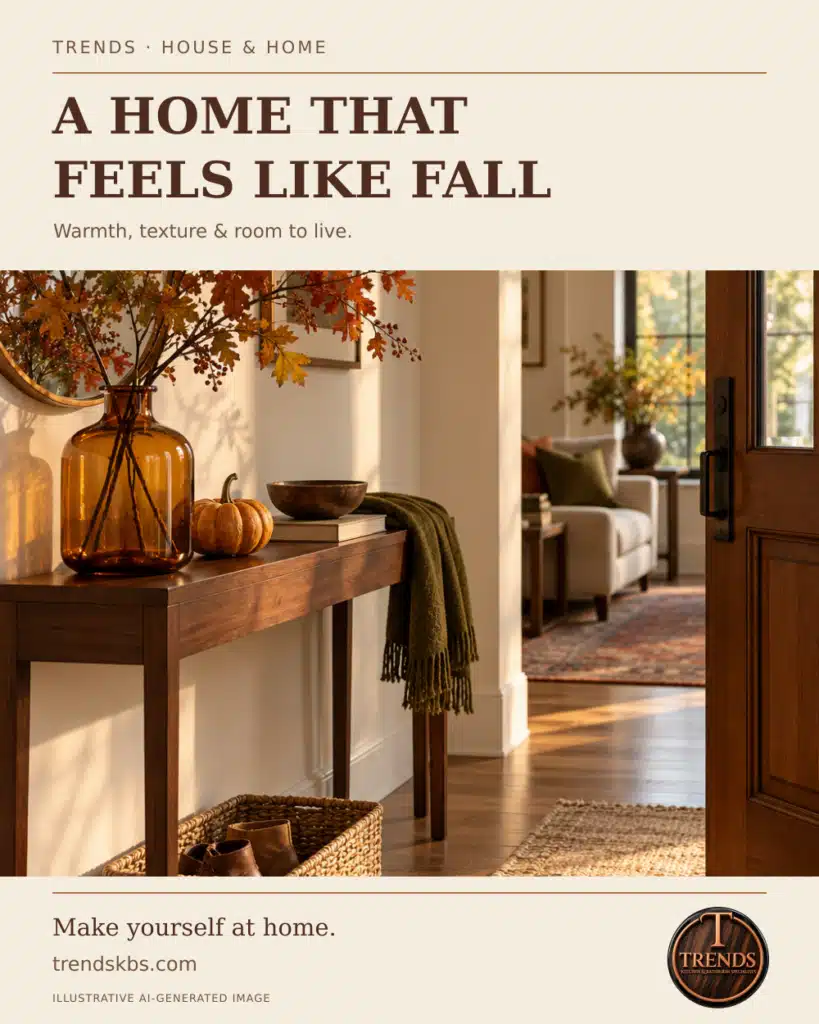
For a warm, relaxed fall room, begin with the things already shaping it: wall color, wood tones, daylight, upholstery, and the items you actually use. A deep wood console, an olive textile, and a simple amber vase can suggest the season without covering every surface. In a lighter room, a small amount of rust or copper may be enough to change the mood.
Take a picture of the room before adding anything. The photograph can make clutter and empty areas easier to notice. It also gives you a way to compare the finished arrangement without relying on the feeling that you must keep adding more.
Choose a few places instead of decorating everything
An entry, a mantel, and a dining table are useful candidates for seasonal attention. You don’t have to use all three. Choose the places your household sees and enjoys most, then leave other surfaces available for everyday life.
At the entry, make space for keys, shoes, or coats before placing decorations. A console that looks beautiful but leaves no landing place for a bag will be rearranged the first time someone comes home. A seasonal display works better when it shares space with the room’s actual job.
On a dining table, begin by setting a place as if someone were going to sit down. Check where a glass, plate, and serving dish will go. Then choose a centerpiece that leaves room to eat and talk. If your arrangement has to move for dinner, make that easy by grouping it on a tray you can lift as one piece.
Use color as a guide, not a shopping list
Pick two or three colors that work with the room. For fall, you might use warm cream, olive, and rust; copper, walnut, and muted gold; or soft brown with a restrained orange accent. These are starting points, not rules about what an autumn room must look like.
Look through what you already own before buying anything. A bowl from another room, a folded blanket, a basket, or a piece of pottery may give you the color and texture you’re looking for. Moving an item can make it feel useful again without adding to the amount you eventually need to store.
If a room already has several strong colors, keep the seasonal additions quieter. If the room is mostly neutral, one richer accent may be plenty. The goal is a room you enjoy living in, not a display that competes with everything around it.
Build an arrangement in a way you can adjust
Start with the largest piece, then add a smaller supporting item and one soft or natural texture. For an entry, that could be a vase, a small pumpkin, and a basket. For a mantel, it might be a piece of existing artwork with a restrained seasonal grouping at one side.
Step back between additions. Check the arrangement from the doorway and from the place where you normally sit. Something that looks balanced close up may feel crowded from across the room. If the display is difficult to dust around, reach past, or move, simplify it.
Natural materials can be appealing, but think about their condition and the surface underneath them. Use an appropriate protective layer where needed, and follow the care guidance for the furniture or finish. Avoid placing damp materials directly on a wood surface or relying on an adhesive that hasn’t been confirmed suitable for that finish.
Let Halloween and Thanksgiving have different moods
Halloween can be playful, dramatic, or a little strange. Thanksgiving often calls for a different feeling: food, conversation, gratitude, and a welcoming table. They share a season without needing to share every decoration.
A practical way to make the transition is to keep a common base. Wood, baskets, warm textiles, and an autumn color palette can stay. Halloween-specific pieces can be packed away, leaving room for a simpler table arrangement, handwritten place cards, or something connected to a family tradition.
Consider what the household enjoys rather than changing everything on a fixed date. If children look forward to helping, give them a manageable part of the changeover. They can choose which keepsakes come out, make paper place cards, or help decide where a favorite seasonal object belongs.
Warm lighting belongs in the plan
Look at the room in the evening, when you’ll actually be using it. A single bright overhead light can feel very different from a room with a useful reading lamp and gentle background light. Check whether the light supports the activity: reading, eating, preparing food, or finding the way through the room.
Use lighting and decorative products according to their instructions. Keep walking routes clear, and don’t make an attractive display dependent on a cord across a doorway. Flameless decorative candles can provide a similar visual effect where an open flame isn’t appropriate. Keep decorations away from heat sources and preserve the clearances required by a fireplace or heating appliance.
A mantel photograph can be inspiration for color and composition without being a safe installation plan for your particular fireplace. The appliance’s instructions and actual operating conditions need to lead those decisions.
Make a small budget solve a specific problem
If you’re going to spend money, name the missing piece first. “The entry needs a place for shoes” is clearer than “I need more fall décor.” A useful basket may help with both function and appearance. Buying several decorative pieces without deciding where they belong may simply leave you with more objects to manage.
Think about storage before purchasing anything large. A wreath, a fragile arrangement, or an oversized seasonal sign needs a home when it’s not in use. If your storage is already full, choose a smaller addition, reuse what you have, or replace an item you no longer enjoy.
You can also choose a stopping point. Finish one area, live with it for a few days, and decide whether another area actually needs attention. That pause keeps decorating connected to the house rather than to a stream of new ideas on a screen.
Keep the home comfortable for the people using it
Guests need somewhere to put a coat, sit down, and set a drink. Children need room to play. Pets and people with different mobility needs affect where objects belong. Walk through your arrangement with those uses in mind.
Keep stairs, entrances, and everyday paths clear. Make sure a textile, basket, or display isn’t creating an awkward route. If something constantly gets moved out of the way, let that be information: the room may be telling you the arrangement doesn’t fit.
A successful seasonal room still feels like your home when the gathering is over. It supports the way you live, gives you something you enjoy seeing, and is manageable to care for.
Carry the useful pieces into the next season
As Thanksgiving passes, decide which elements still feel right for winter. Warm wood, a favorite throw, a basket, and simple lighting can remain while Christmas details take their place. Later, those details can give way to a calmer January arrangement.
Take a photo before packing a display you liked. Store related pieces together with a short note about where they worked. You don’t have to recreate the photograph exactly next year; it simply saves you from starting from nothing.
If holiday visitors are part of your plans, our complete guest-preparation article helps you put cleaning and working essentials ahead of last-minute cosmetic projects. For broader improvement decisions, explore Home Improvements That Make Sense.
What’s the one change that makes your house feel like fall: a color, a blanket, a favorite decoration, or something cooking in the kitchen?
Trends House & Home. Interior imagery is AI-generated illustration, not a photograph of an actual client project.